

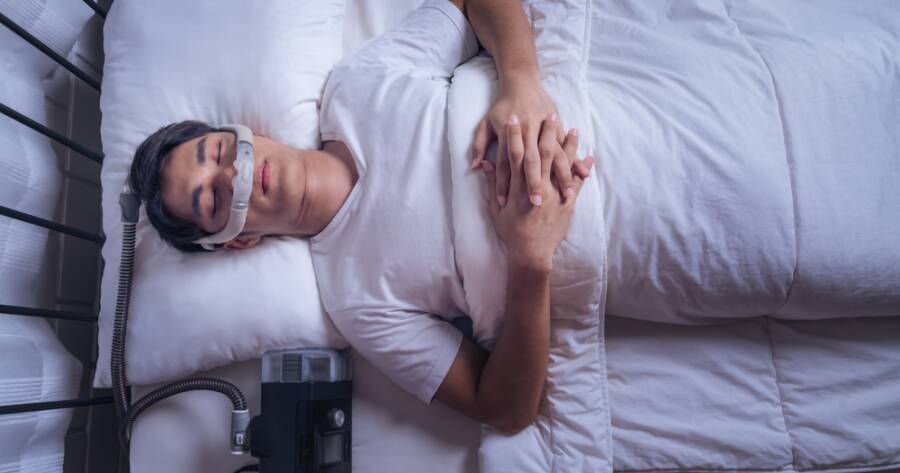
Sleep apnea treatment in 2026 extends well beyond a single machine or procedure. Positive airway pressure remains central, but oral devices, implantable stimulators, lifestyle interventions, surgery, and even an FDA-approved medication now give some patients additional options. The right approach depends on the type and severity of sleep apnea, anatomy, weight, treatment tolerance, and other health considerations.
CPAP, APAP, and BiPAP Remain Core Treatments
Positive airway pressure therapy remains one of the most widely used treatments for sleep apnea. CPAP supplies a steady level of air pressure to help keep the airway open during sleep, while APAP automatically varies pressure and BiPAP uses different pressure levels for inhalation and exhalation (source).
These options can be especially useful because treatment can be adjusted to the individual. Someone who struggles with fixed pressure may tolerate an auto-adjusting or bilevel system more comfortably. Mask design also matters, since nasal pillows, nasal masks, and full-face masks provide different levels of contact and coverage.
Comfort features such as heated humidification, quieter motors, and connected monitoring have also made modern PAP systems easier to manage. Even so, consistent use remains essential, so patients who struggle with masks or pressure settings should work with their sleep-care team rather than simply abandoning therapy.
Oral Appliances and Positional Therapy
For people who cannot tolerate CPAP or prefer another approach, oral appliances may be an option. These devices are fitted to the mouth and can help prevent the jaw or tongue from moving into a position that blocks the airway during sleep. NHLBI notes that oral devices may be prescribed when a patient does not want to use CPAP or cannot tolerate it (source).
Positional therapy can also help selected patients whose breathing problems are worse when they sleep on their backs. Side sleeping, weight management, limiting alcohol, and other lifestyle measures may complement medical treatment rather than replacing it altogether.
Medication Is Now Part of the 2026 Landscape
One of the biggest changes in recent sleep apnea care is the arrival of an FDA-approved medication for certain patients.
In December 2024, the FDA approved Zepbound, or tirzepatide, for adults with obesity and moderate-to-severe obstructive sleep apnea. It is intended to be used alongside a reduced-calorie diet and increased physical activity (source).
This does not mean medication has replaced CPAP or other therapies. Tirzepatide applies to a specific group of patients, and treatment decisions still require medical evaluation. Its approval is significant, however, because pharmacotherapy is now an established option for some adults rather than merely an experimental direction.
Implantable Nerve Stimulation Is Expanding
Hypoglossal nerve stimulation offers another option for selected people with obstructive sleep apnea who cannot successfully use conventional treatment. These systems stimulate nerves involved in controlling tongue movement so the airway is less likely to become obstructed during sleep.
The implant landscape also expanded recently. In August 2025, the FDA approved the Genio System 2.1 for certain adults age 22 and older with moderate-to-severe obstructive sleep apnea who have not succeeded with or cannot tolerate standard treatments including PAP, oral appliances, lifestyle measures, and pharmacotherapy (source).
Implants are not first-line treatment for everyone. Eligibility depends on factors such as apnea severity, previous treatment history, anatomy, and overall health, so evaluation by a sleep specialist and surgeon is necessary.
Surgery Still Has a Role
Some patients have anatomical problems that make surgery worth considering. Depending on the cause of obstruction, procedures may remove enlarged tonsils or excess soft tissue, advance the upper or lower jaw, or otherwise enlarge the airway. NHLBI also lists hypoglossal nerve stimulation among surgical approaches used for sleep apnea (source).
Surgery is highly individualized. A procedure that makes sense for someone with enlarged tonsils may offer little benefit to someone whose obstruction arises elsewhere, which is why anatomical evaluation matters before choosing this route.
Clinical Trials Continue to Expand Future Options
Even with more treatments available, researchers continue testing new drugs, devices, behavioral strategies, and combinations of therapies. ClinicalTrials.gov allows patients to search currently listed sleep apnea studies by location, intervention, recruitment status, and eligibility criteria (source).
Participating in a clinical trial can provide access to emerging approaches, but experimental treatments are not guaranteed to work and may involve additional risks or monitoring. Anyone considering a study should review the protocol carefully with a qualified healthcare professional.
Choosing Among Sleep Apnea Treatments in 2026
There is no single best treatment for every person with sleep apnea. CPAP and other PAP systems remain central, but oral appliances, positional therapy, lifestyle changes, surgery, nerve-stimulation implants, and tirzepatide now create a much broader treatment landscape.
The most appropriate option depends on why the airway is collapsing, how severe the condition is, whether obesity is contributing, and which therapies a patient can use consistently. In 2026, the key advantage is not that one treatment has replaced all the others, but that more patients have realistic alternatives when conventional therapy is uncomfortable, ineffective, or unsuitable.